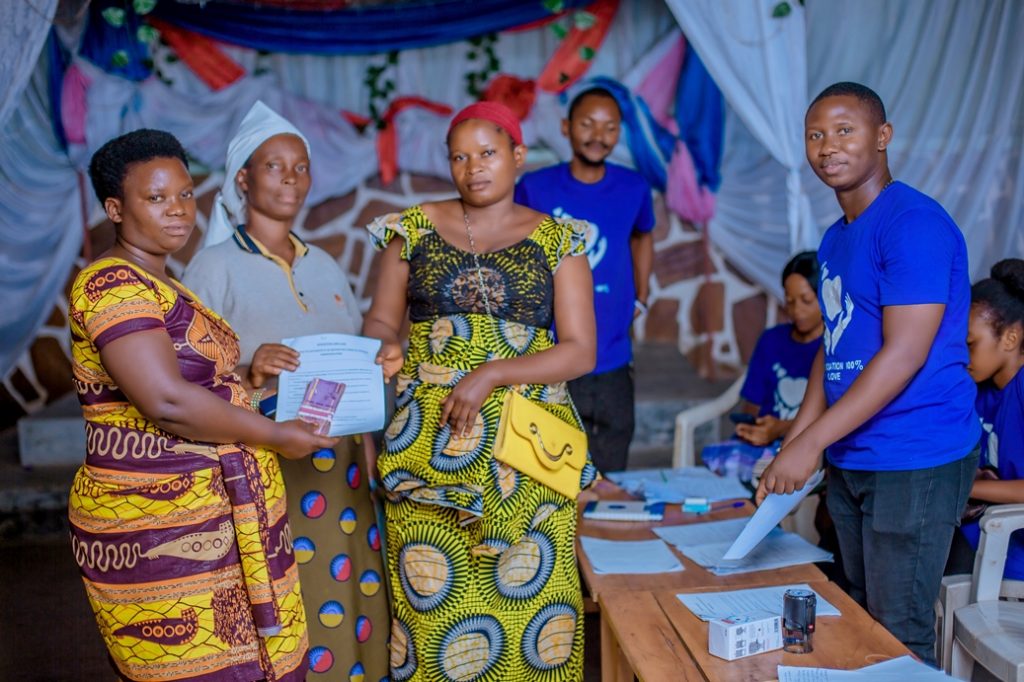
Across Africa, millions of women manage small, informal businesses—selling food in local markets, providing services in neighborhoods, or running home-based micro-enterprises. These women are often the backbone of their families, supporting children, elderly relatives, and households with limited resources. Yet, despite their hard work, they face enormous obstacles: unpredictable income, lack of access to capital, and vulnerability to sudden financial shocks like illness or urgent family expenses.
Research shows that when women gain financial autonomy, communities thrive. They are able to invest in education, improve health outcomes for their families, and create ripple effects in their local economies. Yet in many parts of Africa, small-scale female entrepreneurs receive little to no support. According to the International Labour Organization, women in low-income regions are more likely to face financial exclusion, limited access to credit, and constrained opportunities for entrepreneurship.
The Challenge: Lack of Access to Capital and Financial Security
For women operating in the informal sector, traditional financial systems rarely meet their needs. Loans are often inaccessible or come with prohibitive interest rates. Many women cannot provide formal credit histories, while financial institutions tend to prioritize larger enterprises. As a result, a vast majority of these women struggle to stabilize their businesses, expand operations, or respond to emergencies.
Even when women manage to generate a modest income, the absence of reliable savings and safety nets leaves them vulnerable. Unexpected school fees, medical bills, or household emergencies can wipe out weeks—or months—of earnings. This instability not only threatens the livelihood of women entrepreneurs but also limits the broader economic potential of their communities.
The Solution: Imbuto – Funds and Training for Women Entrepreneurs
Imbuto was created to address these challenges directly. The project provides funding to groups of women, organized with clear leadership roles—cheffe, caissière, secrétaire—enabling them to manage their resources collectively. By working in groups of ten, women create 10 “mini-insurance” funds, which act as safety nets for emergencies and enable them to grow their businesses sustainably.
In addition to financial support, Imbuto emphasizes skills development. Participants learn to manage their funds, make group-based financial decisions, and strengthen leadership capabilities. This combination of capital and training transforms small-scale vendors into resilient entrepreneurs capable of navigating the challenges of informal business life.
Impact Across Communities
Since its launch, Imbuto has demonstrated measurable success:
- 100+ women supported through group-based funds
- 10 mini-insurance funds created to protect against emergencies and unexpected expenses
- Enhanced leadership and financial skills for all participants
- Increased stability and income potential for households of participating women
The pilot phase in Burundi has shown that even modest contributions, when pooled and managed collectively, can surpass the initial funding, creating a sustainable financial ecosystem within the community.
Why It Works: Group-Based Collective Action
Imbuto’s approach is built on solidarity and shared responsibility. Women learn not only to save and manage money but also to collaborate and support each other. This method strengthens social cohesion while promoting entrepreneurship. The success of the pilot groups has opened the door to scaling Imbuto into a formal microfinance or COOPEC, extending its benefits to more women and communities.
Looking Ahead: Expanding the Reach
The potential of Imbuto goes beyond the pilot. By leveraging partnerships with organizations, local leaders, and investors, the project can grow to reach hundreds of women across multiple regions. A formalized structure will allow Imbuto to provide greater financial stability, broader training, and access to capital—empowering women to take control of their economic futures.
Author / Contributor